
In this tutorial we demonstrate the calculation of Volume and Density of an irregular plasticine mass object using Polytech’s BT11 Teacher’s STEM Lab Kit.

Equipment
- BT11 Teacher’s STEM Lab Kit
- 500ml plastic beaker
- String
- Windows PC
- iLab for Windows software
Materials
- Plasticine mass
Resources

Safety Note
There are no special safety requirements for this experiment.
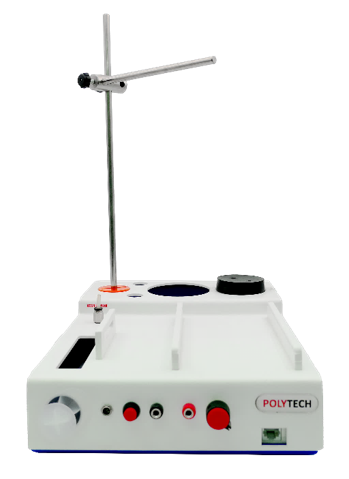
- Assemble the retort stand with two metal rods connected with a boss perpendicular to each other.
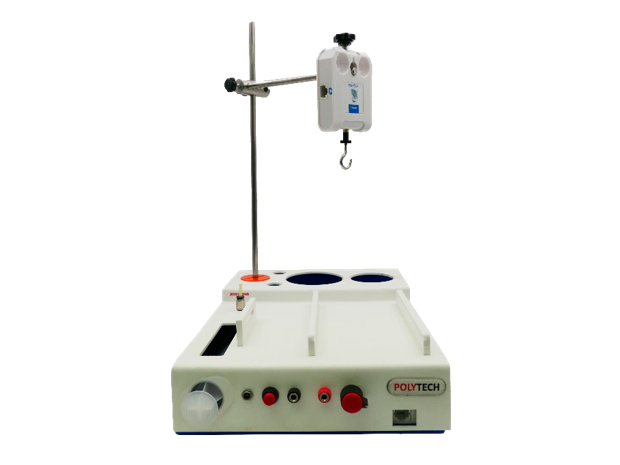
- Secure the force sensor vertically at the end of the horizontal rod with a downward direction.
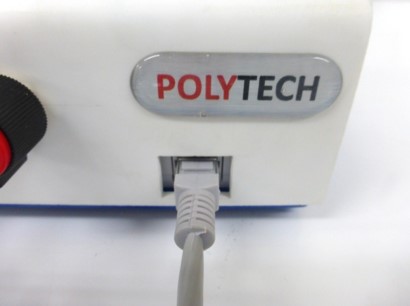
- Connect the force sensor to the BT11 with UTP cable.
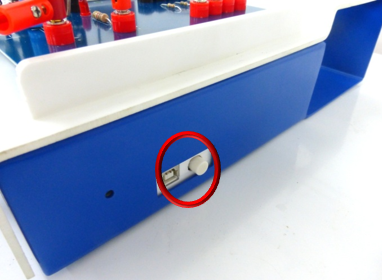
- Turn on the BT11 datalogger by pressing the button on the right side.
- Connect the BT11 to the computer with wireless connection. (For further instructions consult the “Operating BT11” manual).
- Run the iLab software and
- extract the FR.P02.dis iLab Experiment File from the zip dowload and save it in your Lab PC
- on the main menu screen select “open new”
- select the FR.P02.dis iLab Experiment file

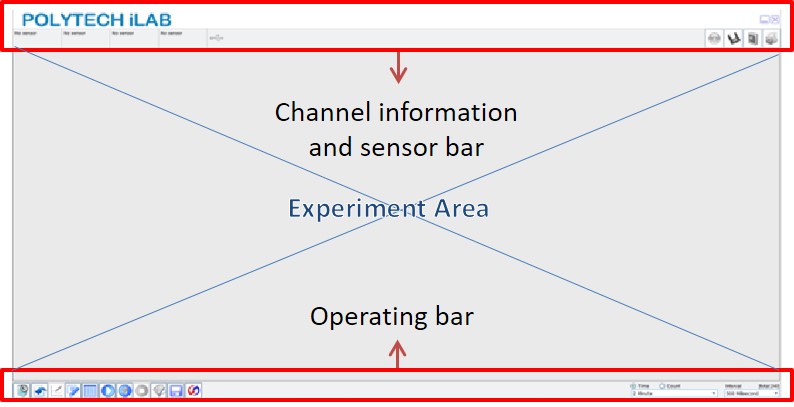
- The Force sensor should be calibrated before each experiment. In order to calibrate the sensor click the calibration button
 on the channel information bar.
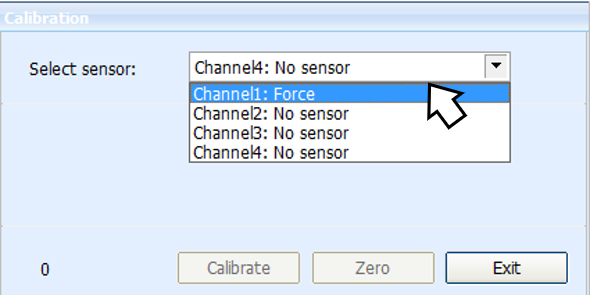
- The calibration will appear, select the “force sensor” at Channel 1 and click the “zero” button.
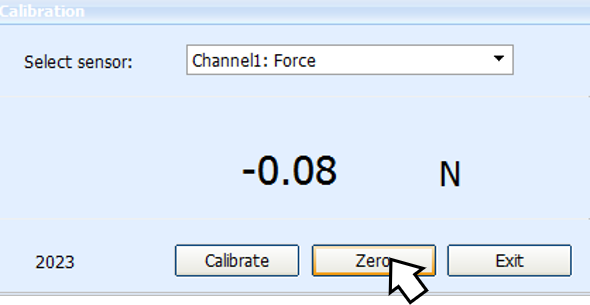
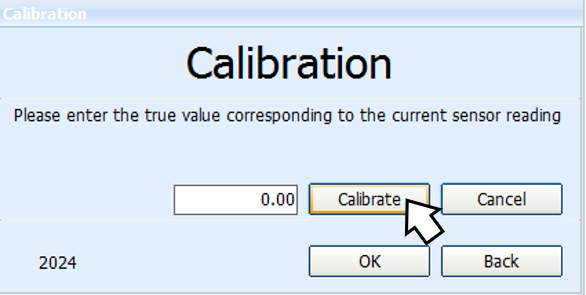
- To the next screen select the “Calibrate” button, click ok and you are ready to proceed the experiment.
- Whenever you’re ready click “Start (F6)”
 to start collecting data with the force sensor on your pc screen.
 - Make an irregular shape by using the plasticine and hang it with a string from the force sensor. Record the force needed to hold the weight on air (as shown in the picture).
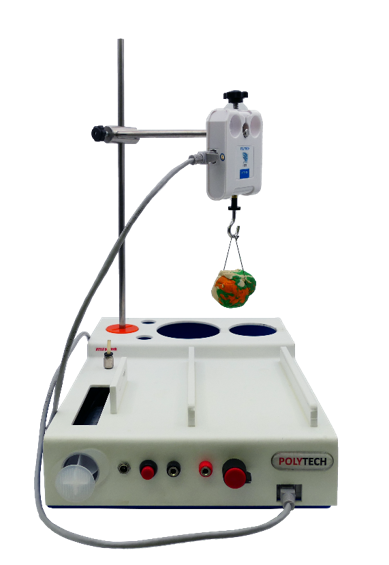
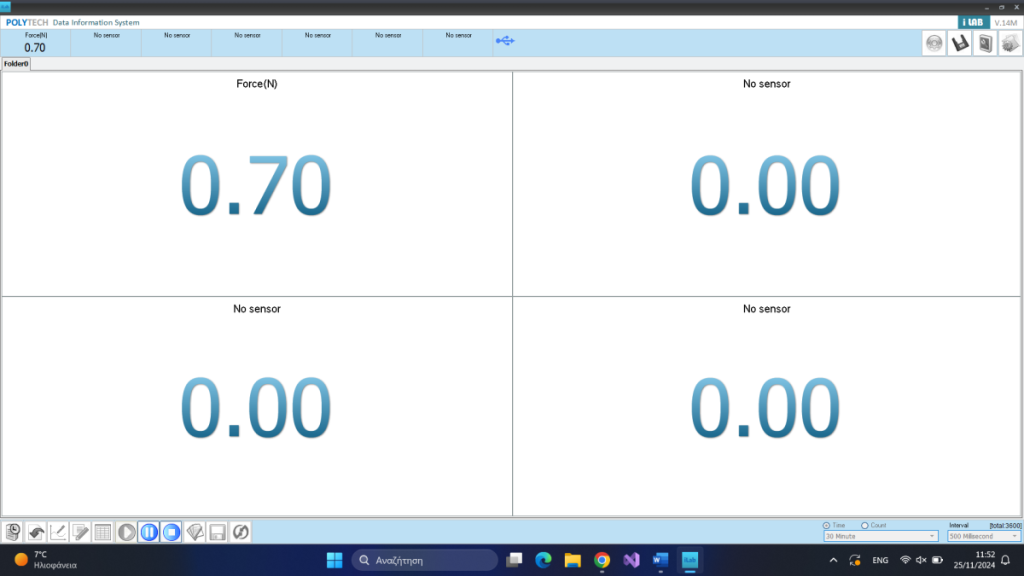
The force in Newtons (N) you just recorded represents the weight W of the mass of the rectangular cube. The mass is measured in kilograms (kg). Note that the metal hook and the string are considered weightless in this context. We know the relationship between force and mass is given by:
N = Kg × m/s2
- Fill the plastic cup with water up to 350ml.
- Immerse the object into the water. Record the volume V of the displaced water.
In this case:
V ≈ 42 ml or cm3
- Calculate the object’s mass (m) in kilograms using earth’s gravitational acceleration (g) and the Weight (W) recorded from the Force sensor.
W = m × g ⤇ m = W/g
- W = 0.70 Kg × m/s2
- g = 9.81m/s2 (constant)
In this case:
m = 0.70 Kg × m/s2 / 9.81 m/s2 ⤇
m = 0.071355 Kg
- Convert the mass from kilograms (Kg) to grams (g) in order to use the density formula.
g = Kg / 1000 ⤇ Kg = 1000g
In this case:
m = 0.071355 Kg ⤇ m = 0.071355 × 1000g ⤇
m = 71.355 g
- Calculate the density of the plasticine mass using the formula:
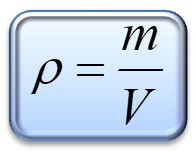
Our data:
m= 71.355 g
V≈ 42 cm3
Our calculations:
ρ = 71.355 g / 42 cm3 ≈ 1.7 g/cm3
- The density of plasticine depends on its composition and brand, but it generally ranges from 1.5 to 2.0 g/cm³.
- This means that plasticine is usually slightly denser than water, which has a density of 1 g/cm³.
- However, the density can vary depending on the additives in the product, such as oils, pigments, or other materials.
End of tutorial