
In this tutorial we demonstrate the calculation of buoyancy of a wooden rectangular cube using Polytech’s BT11 Teacher’s STEM Lab Kit.

Equipment
- BT11 Teacher’s STEM Lab Kit
- Wooden rectangular cube with hook
- String
- 500ml Plastic Beaker
- Windows PC
- iLab for Windows software
Materials
- Tap water
- Table salt 10g
Resources

Safety Note
There are no special safety requirements for this experiment.
- Assemble the retort stand with two metal rods connected with a boss perpendicular to each other.
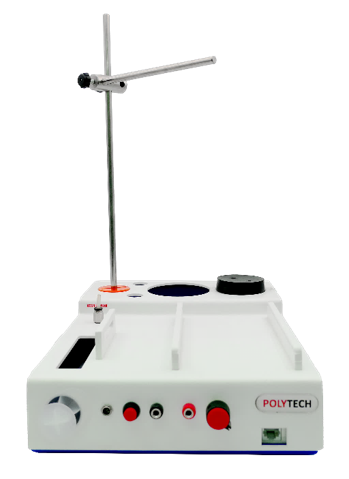
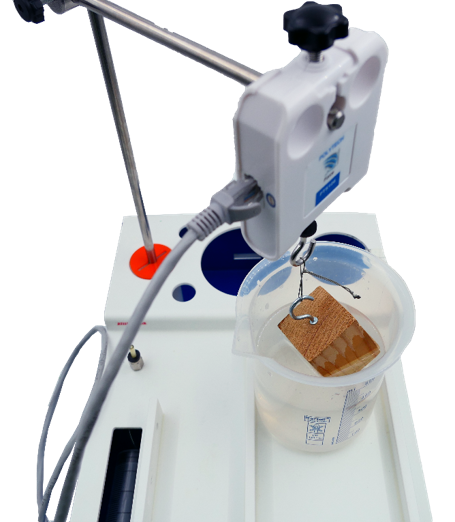
- Secure the force sensor vertically at the end of the horizontal rod with a downward direction.
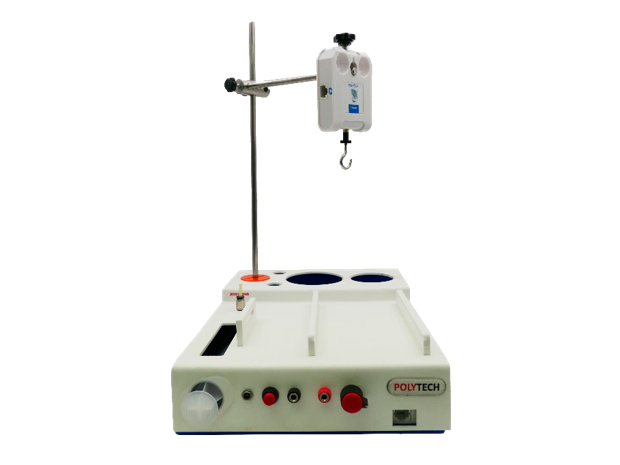
- Connect the force sensor to the BT11 with UTP cable.

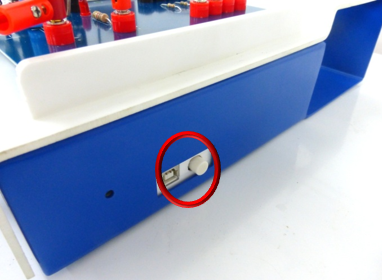
- Turn on the BT11 datalogger by pressing the button on the right side.
- Connect the BT11 to the computer with wireless connection. (For further instructions consult the “Operating BT11” manual).
- Run the iLab software and
- extract the FR.P02.dis iLab Experiment File from the zip dowload and save it in your Lab PC
- on the main menu screen select “open new”
- select the FR.P02.dis iLab Experiment file

- The Force sensor should be calibrated before each experiment. In order to calibrate the sensor click the calibration button
 on the channel information bar.
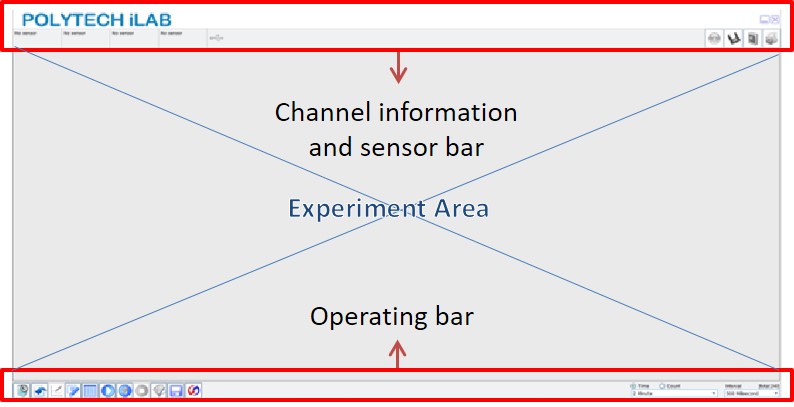
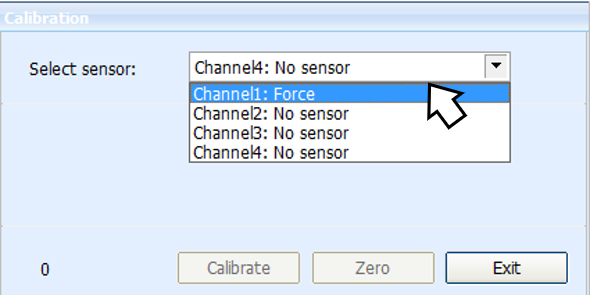
- The calibration will appear, select the “force sensor” at Channel 1 and click the “zero” button.
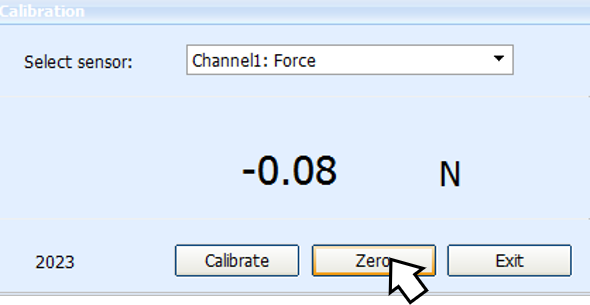
- To the next screen select the “Calibrate” button, click ok and you are ready to proceed the experiment.
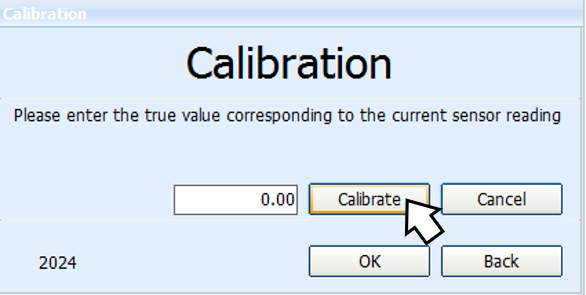
- Whenever you’re ready click “Start (F6)”
 to start collecting data with the force sensor on your pc screen.
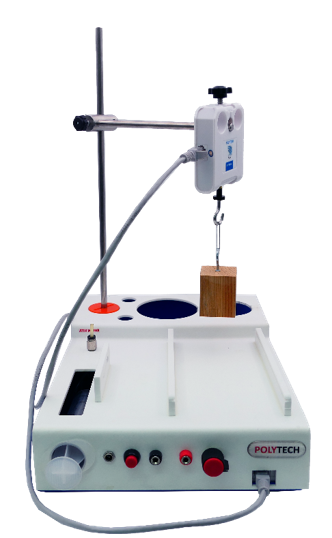
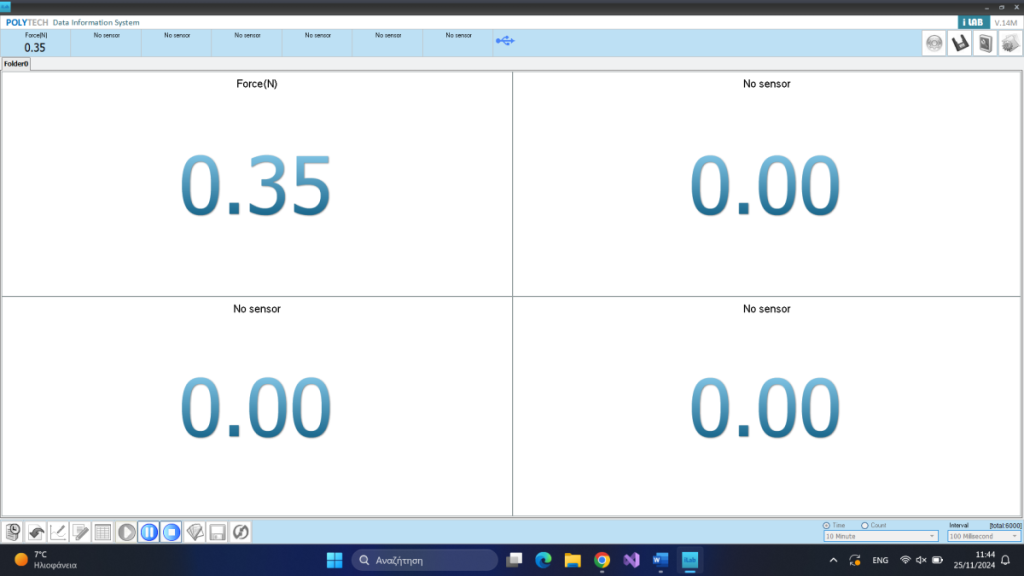
 - Hang the wooden cube with a string from the force sensor. Record the force needed to hold the weight on air (as shown in the picture) as W1.
- Pour 350 ml of tap water into the 500 ml plastic beaker and position it under the sensor.
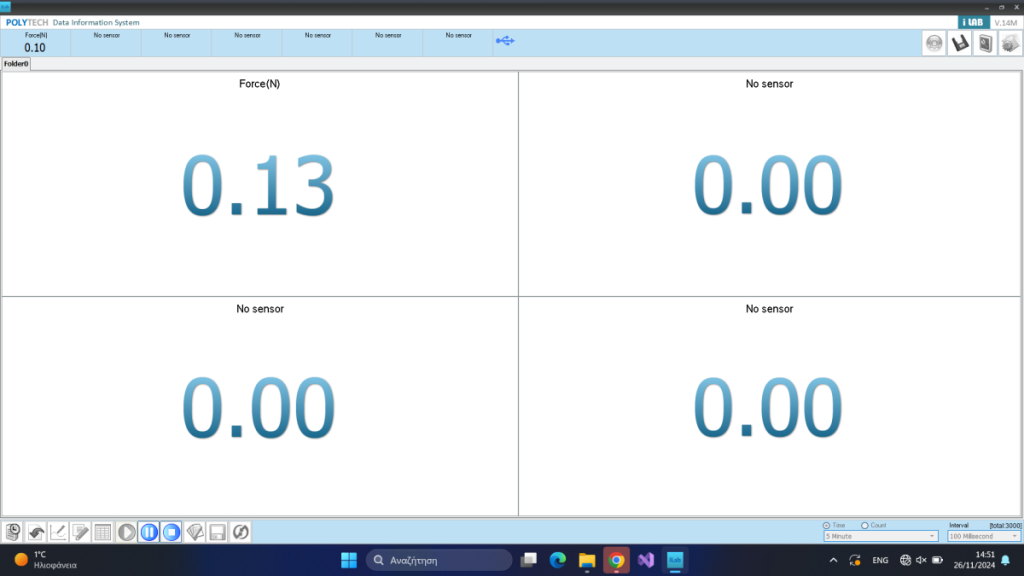
- Submerge the wooden cube into the water in such a way that it floats while the string remains taut and record the force needed to hold the submerged cube. Record the value as W2.
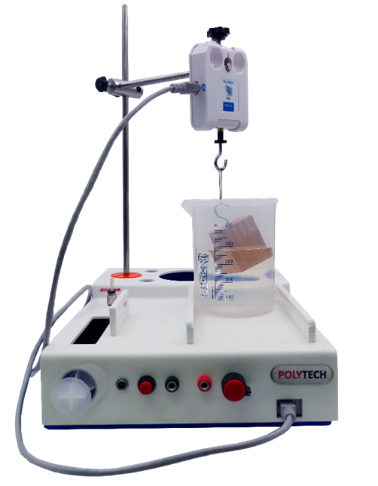
- Notice the rising level of water. Record this volume increase as V1.
- Calculate the difference of the weight W1, recorded before the cylinder was submerged and the weight W2, recorded after the cylinder was merged into the water.
B1= W 1 – W2
This difference is the Buoyancy force B1 acting on the object by the water.
- Calculate the weight of the displaced water:
Wd = V1 × ρwater × g
- Compare the Buoyancy B1 force and the Wd.
According to Archimedes’ principle, the buoyancy force on an object is equal to the weight of the fluid displaced by the object. Therefore, we expect B1 to be equal to the weight of the displaced water.
- Calculate the ratio of weights:
Ratio = W2 ⁄ W1
The ratio depends on the position of the object in the water. Comment on the position in accordance with the ratio.
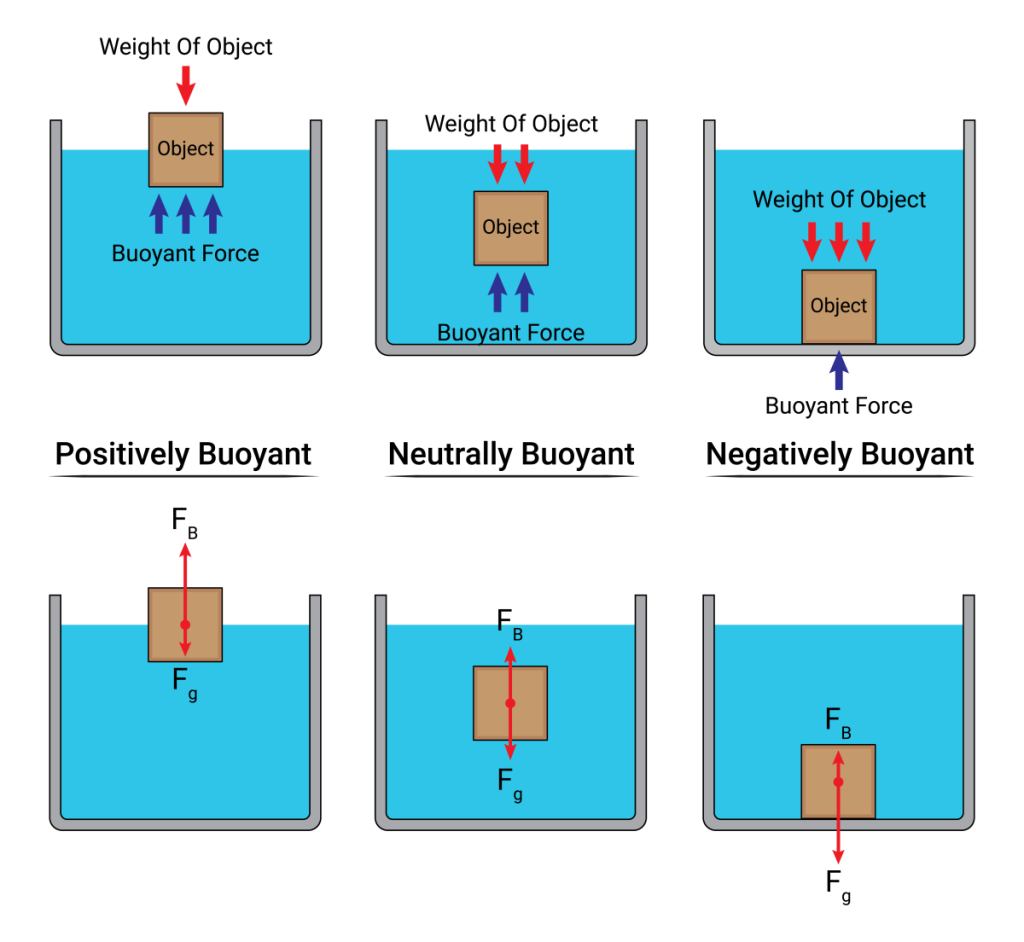
There are three cases:
- Ratio = 1 (neutral buoyancy): the object is buoyant, its weight is equal to the buoyancy force
- Ratio < 1 (negative buoyancy): the object is floating
- Ratio > 1 (positive buoyancy): the object is sinking
- Remove the hooked weight from the beaker and empty it. Prepare a saturated solution of tap water and table salt into the beaker.
- Immerse once again the hooked cube into the solution and record the force measurement.
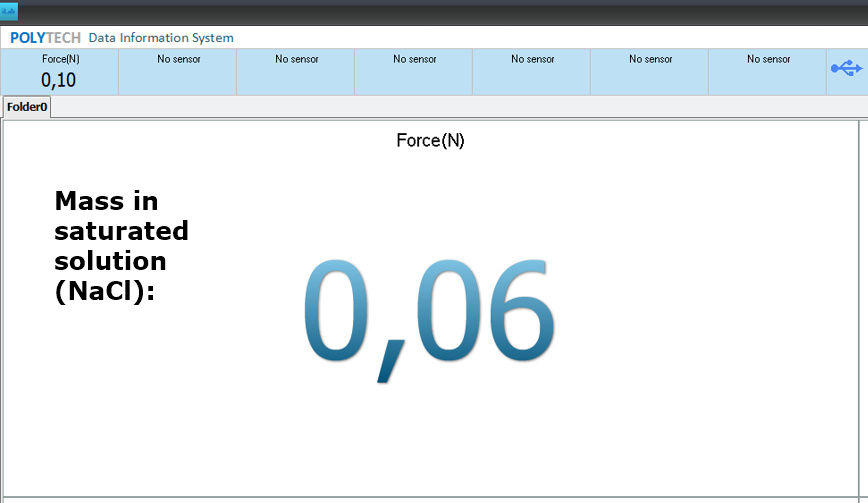
- Calculate the buoyant force for the salted water:
Fbuoyant = Win air – Wimmersed
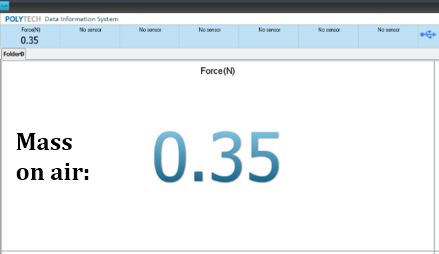
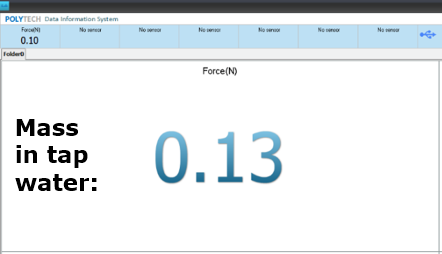
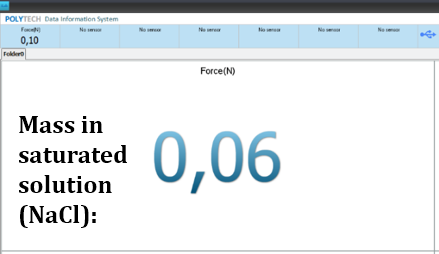
Now you can easily notice the differences of the weight in different fluids. The difference is due to the Buoyant force which depends on the density (ρ) of the fluid. The saturated solution of tap water and table salt (NaCl) has higher density than tap water. So Buoyant Force (Fb) is lower when the mass is submerged in tap water.
FB= ρ × g × V
You can further experiment on different kinds of fluids (e.g. petroleum, oil etc.).
Our calculations:
1. Tap water
Fbuoyant = Win air – Wimmersed =
0.35 – 0.13 = 0.22 N
Wimmersed/Win air = 0.13 / 0.35 = 0.37 << 1 (Floating)
2. Saturated solution (tap water + table salt)
Fbuoyant = Win air – Wimmersed =
0.35 – 0.06 = 0.29 N
Wimmersed/Win air = 0.06 / 0.35 = 0.17 << 1 (Foating)
End of tutorial