
In this tutorial we demonstrate aspects of measurements of temperature using diffirent tools.
Equipment
- Glass beaker 400 ml PS2030.5
- Glass beaker 250 ml CT3001.6
- Plastic beaker 250 ml CT3001.24
- Thermometer PCB1001.24
- Temperature sensor RS104
- Data logger DL120RS
- Windows PC with iLab software installed
NOTE: If you don’t have enough glass beakers to carry out the experiment, you can use typical glasses and household containers alternatively.

Safety Note
No personal safety requirements for this experiment.
For the proper usage of the Temperature sensor please read the instruction manual before using it.
- Add…
- warm water (about 40°C) in a 250ml glass beaker
- cold water (with ice) in a 250ml glass beaker
- tap water in a glass beaker of 400ml.
- One volunteer student will place one hand into the hot water and the other hand in ice water.
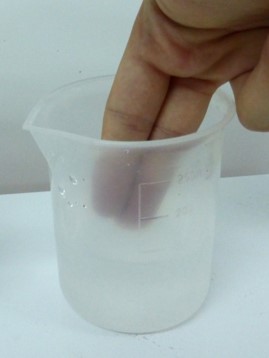
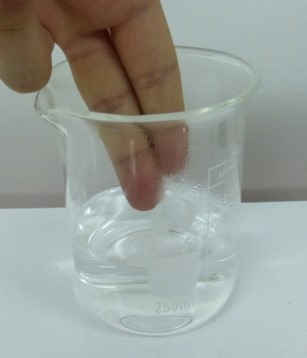
- After a short period of time the student will remove his hands from the beakers and put both hands in the beaker with the tap water. What do you observe?

We feel the tap water:
- warm
with the hand that was before soaked in the cold water - cold
with the hand that was before soaked in the hot water
Conclusion
The estimation of the temperature with the sense of touch and vision is not accurate.
- Use the thermometer as in the picture below. Mark the temperatures of the cold and hot water after leaving the thermometer for 2 minutes in each container.
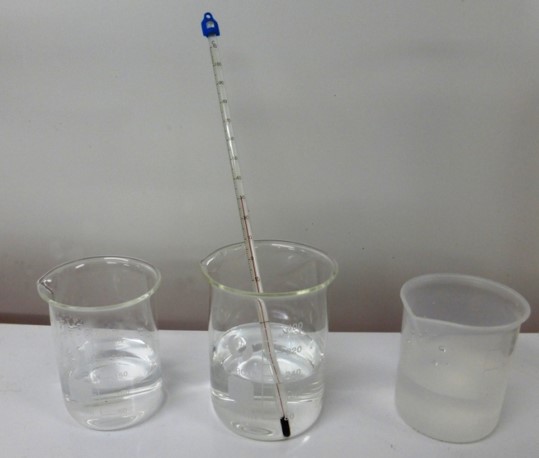
- Place now the thermometer in the tap water. What do you observe?
Indicative results
Cold water: 10 °C
Hot water: 40 °C
Tap water: 28 °C
- The thermometer shows an intermediate temperature of about 28 °C, which is independent of what we measured earlier (hot or cold body).
- In order to measure objectively and precisely the temperature of a body, we use special instruments called thermometers.
- We read the temperature correctly, when the fluid inside the thermometer is stable and we look the scale vertically. Can you distinguish which of the following figures reads the temperature correctly?
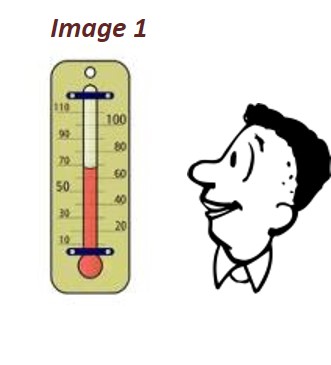
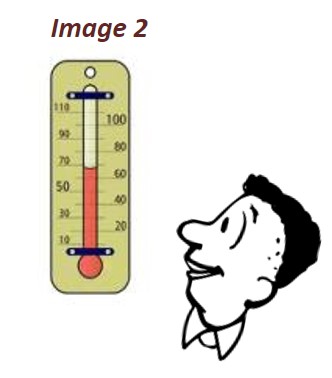
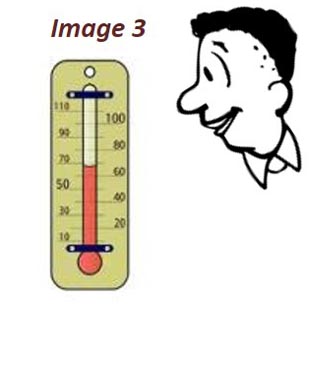
- One of the most modern and reliable ways of measuring temperature is provided by the electronic thermometer or sensor.
- Connect the data logger DL120RS to the Computer via a USB port and the temperature sensor to the data logger via a UTP cable.
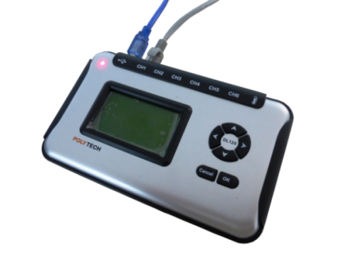
- Switch on the data logger and run the file «G1L04 experiment template.dis» to your Computer to open the application iLab that is set for the experiment.
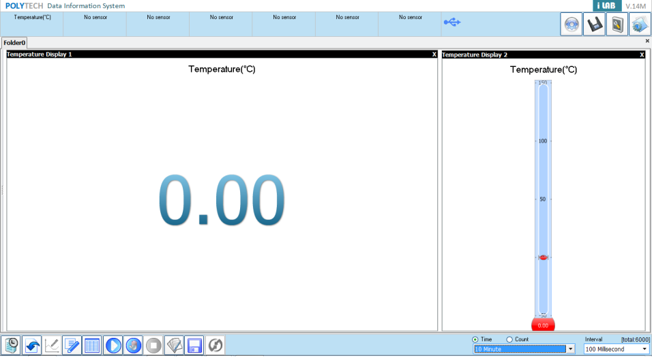
- Select«Start (F6)» in order to start logging the temperature. Then immerse the sensor probe in the water of each container to detect their temperature.


What instrument gives more accurate measurement?
The temperature sensor, as we see, is more accurate than the conventional thermometers (mercury – alcohol) as the scale graduations give accuracy to the first decimal, while the sensor can display temperatures up to four decimal points, if necessary.
Question 1
The temperature is a physical quantity that shows us how hot or cold a body is.
- True
- False
Question 2
Dimitri walks barefoot in his home in winter. He prefers not to walk on the marble floor, but on the wool carpet. This happens because
- The wool carpet has a lower temperature than the marble floor.
- The wool carpet has the same temperature as the marble floor, but Dimitris feels the carpet warmer.
- The carpet has a higher temperature than the floor, because wool is a material with properties different from those of marble.
- The carpet has a temperature equal to the temperature of Dimitris (about 37° C), and the floor has a lower temperature approximately equal to room temperature (about 20° C).
Question 3
Which of the following two measurements is more accurate?
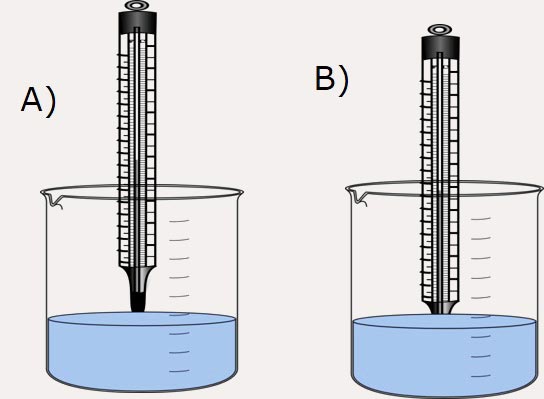
Question 4
In the chart appears that the water temperature vary with time until it reaches the boiling point. The final reading of the graph approximates
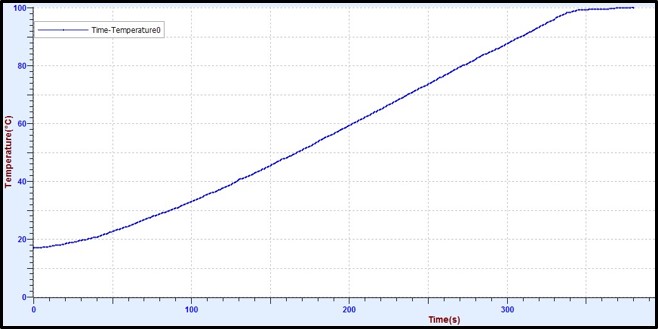
- 80°C
- 95°C
- 100°C
- 110°C
Question 5
When a body expels heat, then its temperature
- Decreases
- Increases
- Remains constant
End of tutorial