
In this tutorial we will study the measurement of length of an object, various measuring equipment and their usage and the errors thay may occur during the measuring process.
Equipment
- Ruler PS2021.18
- Retractable ruler PS2021.17
- Caliper PS2021.23
Note: For this experiment objects such as a book, a desk or a lab bench and any other item the length of which we desire to measure, such as an egg, will be useful.

Safety Notes
There are no special safety requirements for this experiment.
Length measurement
The length measuring instruments we will use in this phase are:
1. Ruler
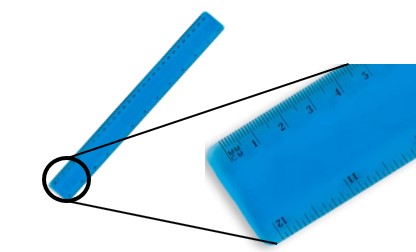
Measurements of less than 30 cm. Features also division in millimeters (mm) where 10 mm = 1 cm
10 mm = 1 cm
2. Retractable ruler
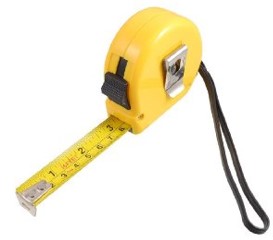
Measurements of more than one meter (m). Features also divisions in centimeters (cm) and millimeters (mm)
10 mm = 1 cm
100 cm = 1 m
3. Caliper

Measurements of centimeters (cm), millimeters (mm) up to the first sub-millimeter (10-2 mm).
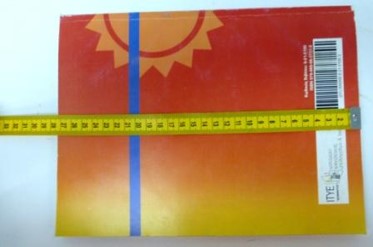
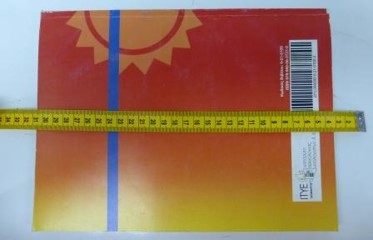
- Suppose we want to measure the length of the physics book. Which of the following methods will give us a more correct result and why?



A few words about errors
- Each measurement includes an uncertainty which is either due to how it is measured, or due to the accuracy of the measuring instruments.
- For example, if we measure the length of an object with a ruler, the value of the measurement will depend on the exact position that we place the ruler, the assessment we do for the precise indication of the location of the edge of the object, viewing angle, etc. This results in different measurements with each other by a small random amount.

- The effect of random errors is not known in advance, but if we measure the same size many times we can estimate the its true value. This is achieved with the average value of the measurements.
- Similarly, we can estimate the corresponding error of our measurements.
- Students will measure the length of the physics book using the ruler and will record their results in the table below in centimeters. Then, they will calculate the average (mean) of all measurements.


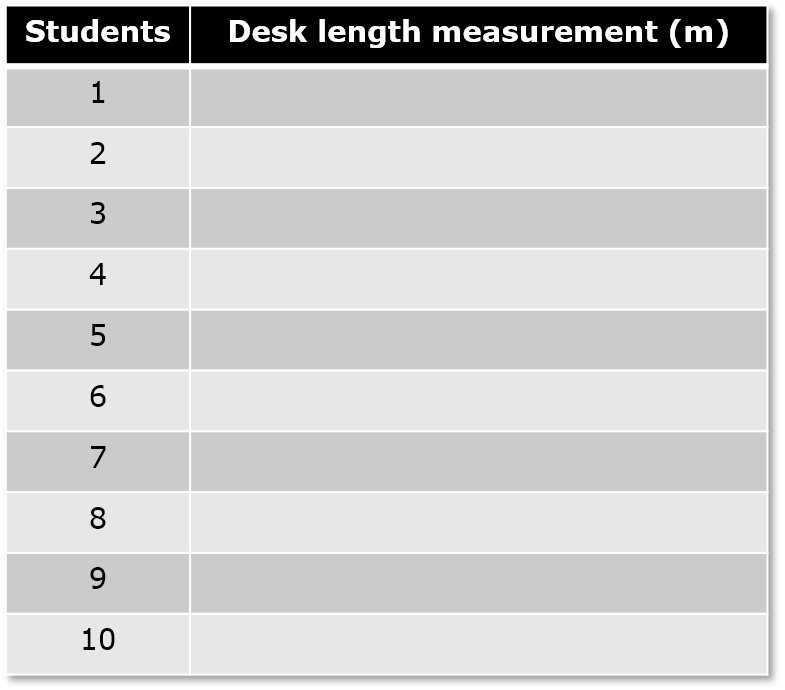
- Students will measure the length of the desk using the retractable ruler and will record their results in the table below in meters. Then, they will calculate the average (mean) of all measurements.
- The caliper is an instrument used for accurate measurement of the length. It is used both for external and internal measurements and also for depth, holes, grooves measurements, etc.
- The vernier is a small scale placed on the caliper. Due to the vernier scale we are able to determine accurately sizes of 0.1 mm, 0.05 mm or even 0.02 mm.
- If the vernier is shifted by one space then the 0 of the vernier scale will be pointing the integer part of the measurement in the main scale and at the vernier scale there will be a division between 0 and 10 that will coincide with the division of the main scale or it will be closer than all the others. This division of the vernier is also the corresponding decimal place of the indication.

For example if we want to measure the diameter of a wooden pulley, we open the caliper just over the length to be measured and place the piece in the fixed caliper jaw. Then, we approach the movable jaw and read the value.
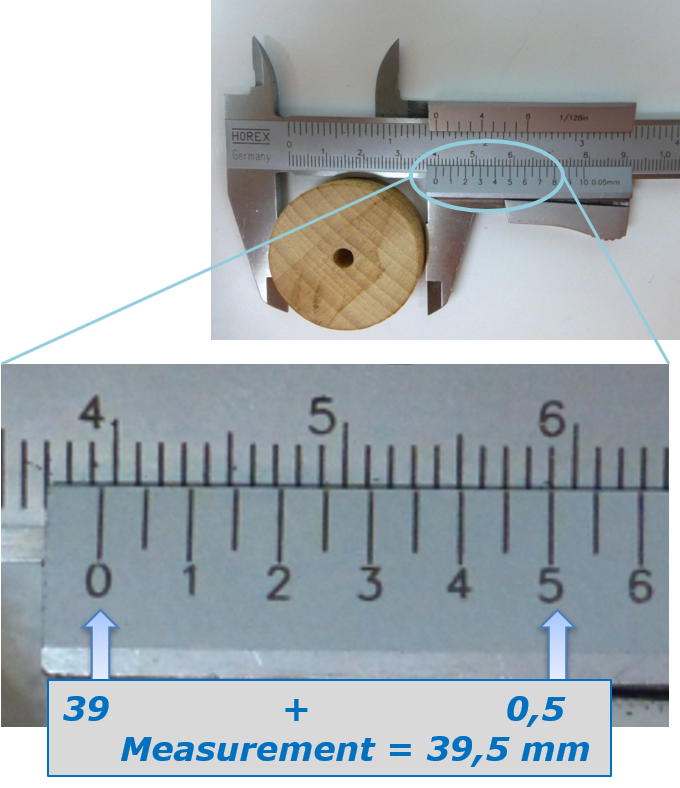
In the photo, the 0 of vernier is between 3.9 and 4 of the main scale and the 5 of vernier coincides with the 5.9 of the main scale, so the instrument reading is 3.95 cm or 39.5 mm.
- Students will measure the length of the desk using the caliper and will record their results in the table below in millimeters. Then, they will calculate the average (mean) of all measurements.

Question 1
Using a 30 cm ruler which of the following lengths can be measured with small error;
- The facade of a large plot of land
- The width of a book
- The width of the classroom
- The head of a pin
Question 2
From the figures below, which one is not measurable?:
- The length of a desk
- The volume of a stone
- The recitation time of a poem
- The light intensity of a lamp
- The beauty of a painting
- The temperature of the water in a lake
Question 3
Four groups of students measured the length of the same desk with a retractable ruler and recorded the following values:
1) 119.8 cm
2) 118.2 cm
3) 120.6 cm
4) 121.4 cm
The length of the desk is:
- 119.8
- 120.0
- 120.2
- 120.3
- 120.6
Question 4
To measure the thickness of a page of a book is better
- to measure the thickness of the page with a caliper
- to measure the thickness of the page with retractable ruler
- to measure the thickness of the page with a ruler
- to measure the thickness of the entire book and divide it by the number of pages
Question 5
A counter of a measure has a thousand gradations. What does each gradation represent?
- 0.5 mm
- 1 mm
- 5 mm
- 1 cm
Question 6
You have measured a length of 5 cm with a ruler graduated in millimeters. Which of the following indications displays correctly the measurement accuracy?
- 5 cm
- 5.0 cm
- 5.00 cm
- 5.000 cm
End of tutorial