Kirchhoff’s Laws
Kirchhoff's circuit laws, are two equalities that deal with the current and potential difference (commonly known as voltage) in the lumped element model of electrical circuits.
In an electric circuit:
Node is called the point of the circuit, where at least three conductors are met .
Loop,is called the part of the circuit between two nodes..
Each closed circuit is called loop
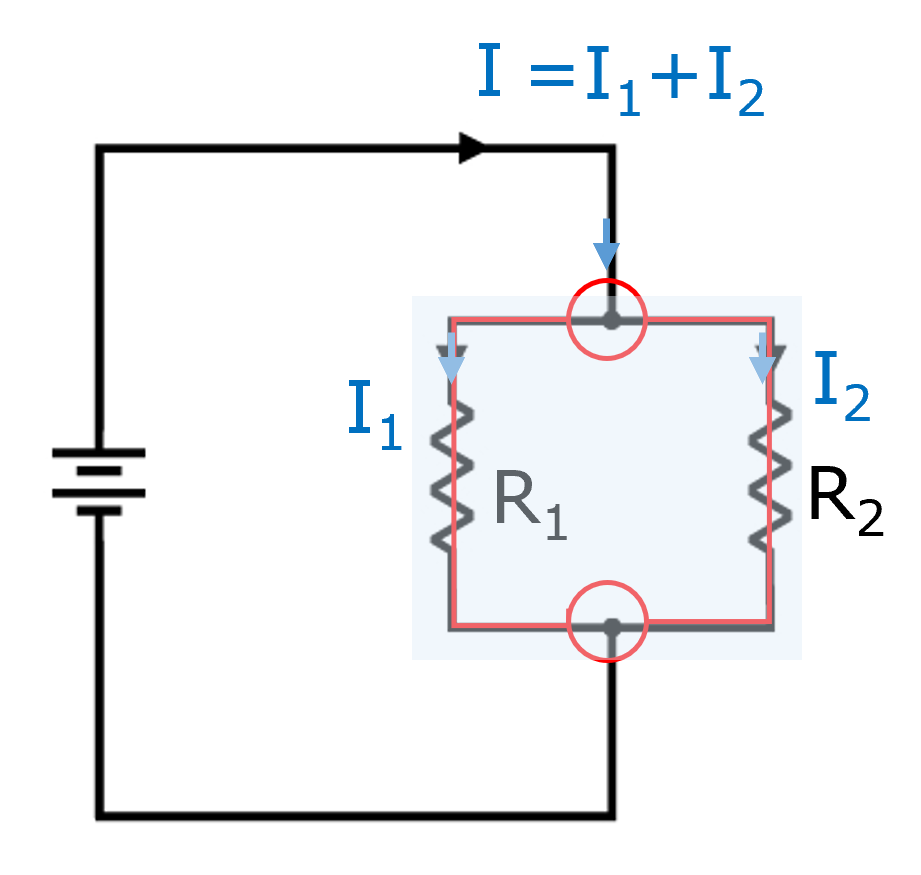
1. Kirchhoff's first law, Kirchhoff's point rule, or Kirchhoff's junction rule (or nodal rule).
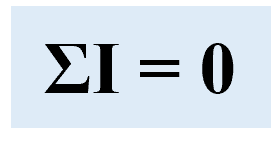
At any node (junction) in an electrical circuit, the sum of currents flowing into that node is equal to the sum of currents flowing out of that node.
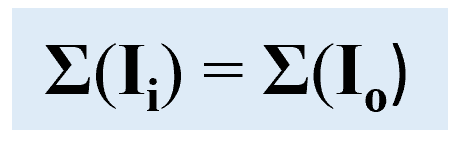
If you consider the Ii is positive and Io is negative then the first rule of Kirchhoff can be expressed as:
The algebraic sum of currents in a network of conductors meeting at a point is zero.
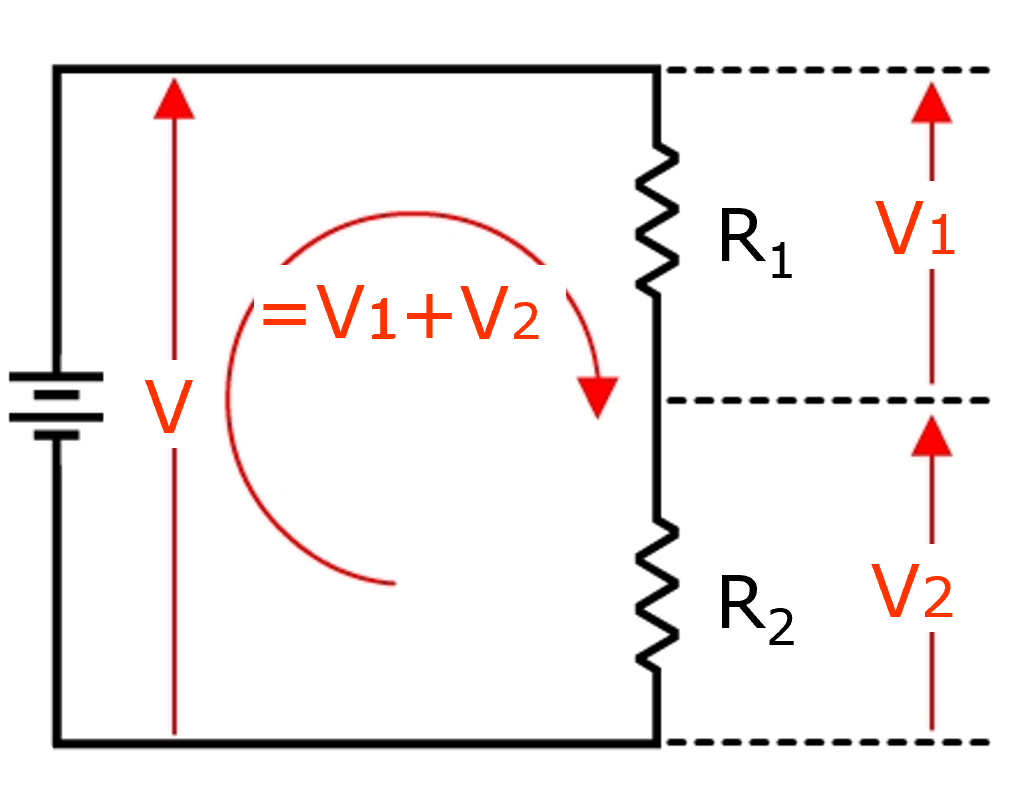
2. Kirchhoff's voltage law:
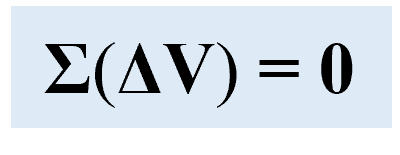
The directed sum of the electrical potential differences (voltage) around any closed network is zero.