
In this tutorial we will demonstrate ways to calculate the mass of a solid body using a force sensor and data logger equipment and the mass of a liquid using an electronic scale and a metered plastic cylinder tube.
Equipment
- Electronic balance PCB1001.19
- Metal base PCB1001.1
- Metal support rod PCB1001.2
- Boss PCB1001.3
- Metal rod with metal clamp PCB1001.4
- Weight set Α and Β PT2011.6 & PT2011.7
- Metal cylinders PT2012.12
- Plastic cylinder 100 ml CT3001.18
- Force sensor RS106
- Data logger DL120RS
- Windows PC with iLab software

Safety Note
For using the force sensor please refer to the guide.
- Setup the metal base and adjust the metal clamp. Hang the sensor by its hole to the opposite side of the metal clamp. The sensor’s hook should be downwards.

- Connect the data logger with the PC and the force sensor.
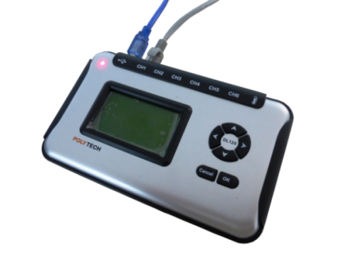
- a. Download, unzip and open the experiment to iLab PC software directly. Click Continue to advance to step 12.
– OR –
- b. Run the iLab software and in the main menu select «Setup».
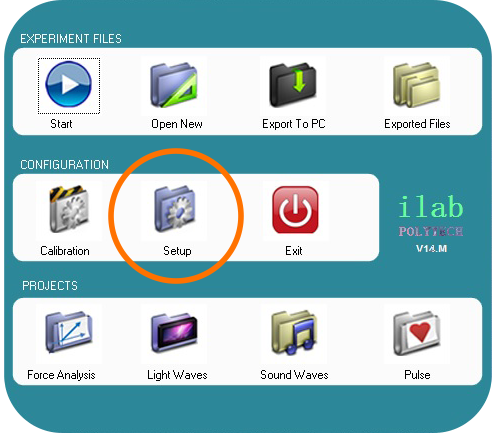
Make sure that the “DL120RS” option is already chosen.
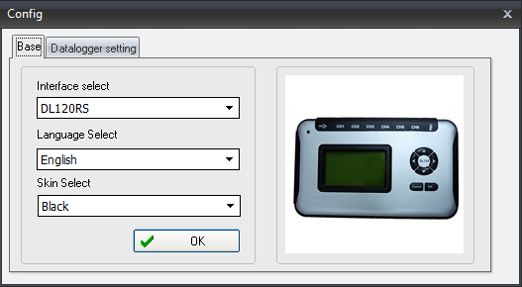
- In the main menu select “Start“ and the experiment screen will open automatically.
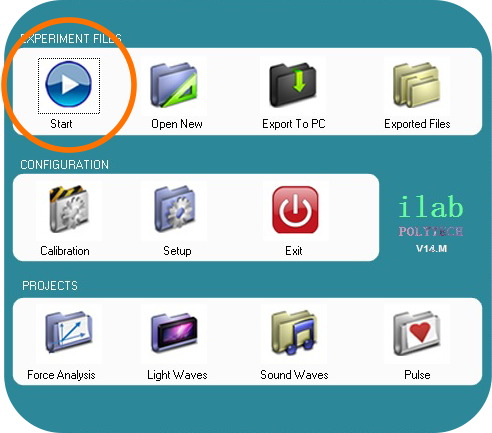
- In the experiment screen you can see the following functional areas:
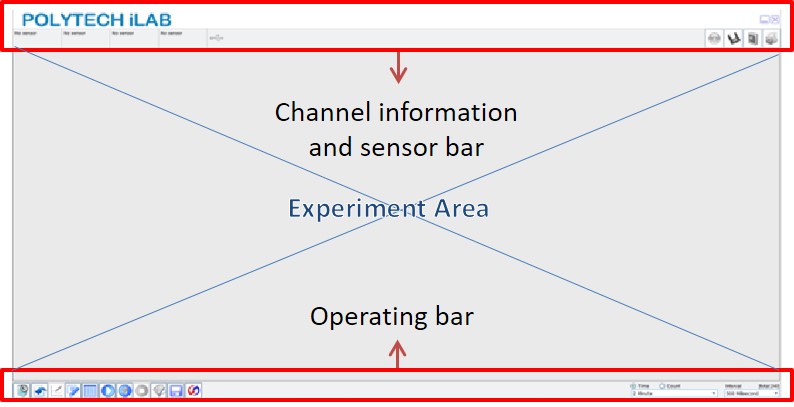
- In the operating bar select “New page (F2)”

and choose the digital display option.

By right clicking, choose the force sensor.
- You can adjust the time of the experiment and the recording intervals according to your preferences but also default settings fulfill the requirements of the particular experiment.

- Force sensor should be calibrated before each experiment. In order to calibrate the sensor click the calibration button on the channel information bar.

- On the calibration screen select the “force sensor” at Channel1.

On the next screen select the “zero” button.
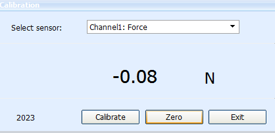
- To the next screen select the “Calibrate” button click ok and you are ready to proceed with the experiment.
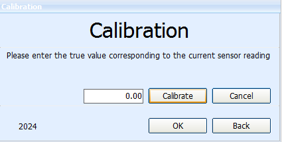
- When you are ready select “Start (F6)” to start collecting data.

Mass of solid body
- Hang a mass to the sensor’s hook. Record its weight W and knowing that g=9.8 m/s2 calculate the mass m.

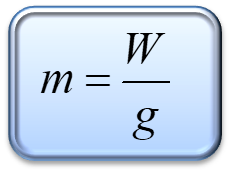

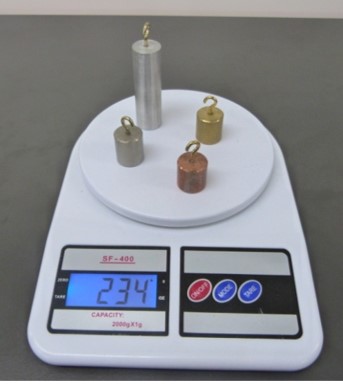
- Weight the mass by the electronic balance and compare the value you found to the previous step.

To measure the mass of a body an electronic balance is used. The indication of the particular balance is not the weight but the mass in grams (g).
- Experiment on different weights and masses. Use the metal cylinder. The cylinders is supposed to be of equal masses. Do you agree? Is the weight the same?
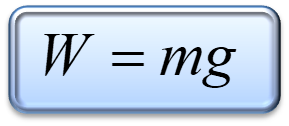
- In each case the weight can be calculated by the formula. Compare the values with the sensor.
Mass of liquid
- Place the plastic cylinder and record its mass mΑ.

- Add water into the cylinder and record the new mass mΒ. Which is the water mass?
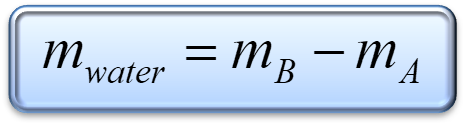
- Finally, calculate the water weight that is contained into the plastic cylinder. Experiment with different kinds of liquids (oil, alcohol etc).
Conclusion
- During the experiment it was proved that mass and weight are two different sizes.
- Mass in each case is a basic size and weight is derivative. This is also proved by the mathematical equation of weight which is equal to the product of the mass m with the acceleration of gravity g.
- Another fact that demonstrates the difference between the two sizes is that they have different units of measurement in the International System (SI).
- For example, the mass is always the same but weight is verified according to the geographical location and the different value of gravity acceleration. For example:

Question 1
Basic sizes are:
- force.
- mass.
- acceleration of gravity.
Question 2
Derivative size is:
- mass.
- length.
- weight.
Question 3
Basic unit is:
- kilograms Kg.
- grams g.
- Newton N.
Question 4
The mass of a solid is affected by:
- its shape
- its color
- its volume
- None of the above
Question 5
If the density of water is 1g/cm3 and the density of ice is 0,92g/cm3, which has more volume, 1kg of water or 1kg of ice?
- Ice.
- Water.
- They have the same volume.
Question 6
Two solid objects A and B have densities ρΑ>ρΒ and the same mass. So:
- VA > VB
- VA < VB
- VA = VB
Question 7
A piece of cork is cut into two equal pieces. The density of each piece is:
- the same with the initial piece.
- twice the density of the initial piece.
- the half of the density of the initial piece.
End of tutorial