
In this tutorial we will study methods for measuring lenght, area of a shape and volume of an object.
Contents
Equipment
- Ruler PS2021.18
- Retractable ruler PS2021.17
- Wooden block 4x4x5 PS2021.4
- Plastic cylinder 100ml CT3001.18
- 4 metal cylinders of equal weight PS2021.22
Materials
- Water
- Plastecine
- Graph paper
- Pencil or pen

Safety Notes
There are no special safety requirements for this experiment.
Part 1: Length measurement
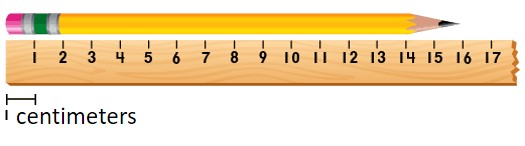
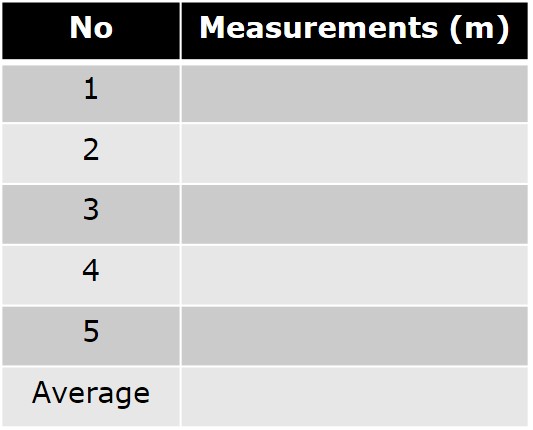
- With a ruler, measure the length of a pencil or pen. Repeat the measurement five times. Write down all the readings on a table.
- Measure with a retractable ruler the length of a classroom desk or a lab bench. Write down your measurements as in step 1.
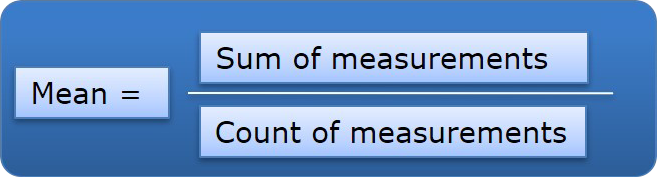
- Calculate the average (mean) of the measurements of the above steps.
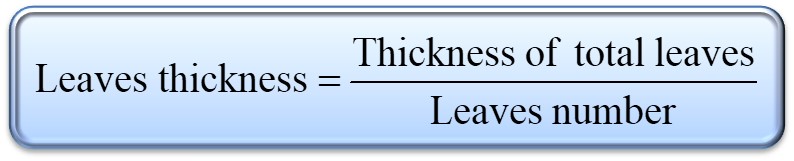
- Measure with the ruler the thickness of 50 inner leaves of the Physics book. Calculate the thickness of each leaf. Repeat the measurements for 100 and 150 leaves. Write down all the readings to the table below:
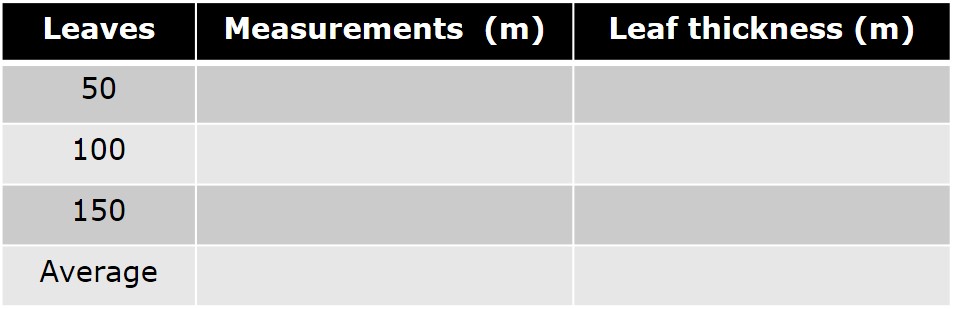
The thickness of the leaves is calculated as follows:
Part 2: Area measurement
- Using the ruler, make the appropriate measurements to calculate the size of the shapes in the picture on the side. Write down your results in column A of the table.
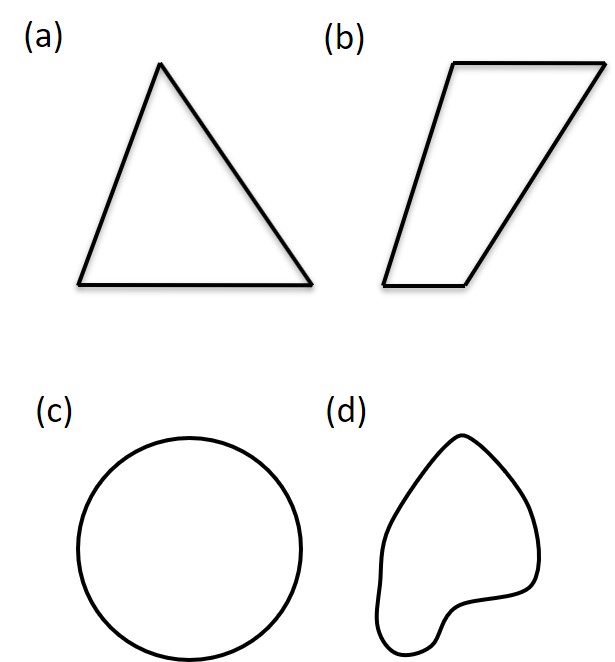
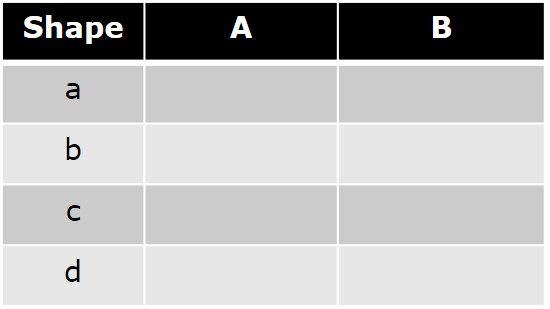
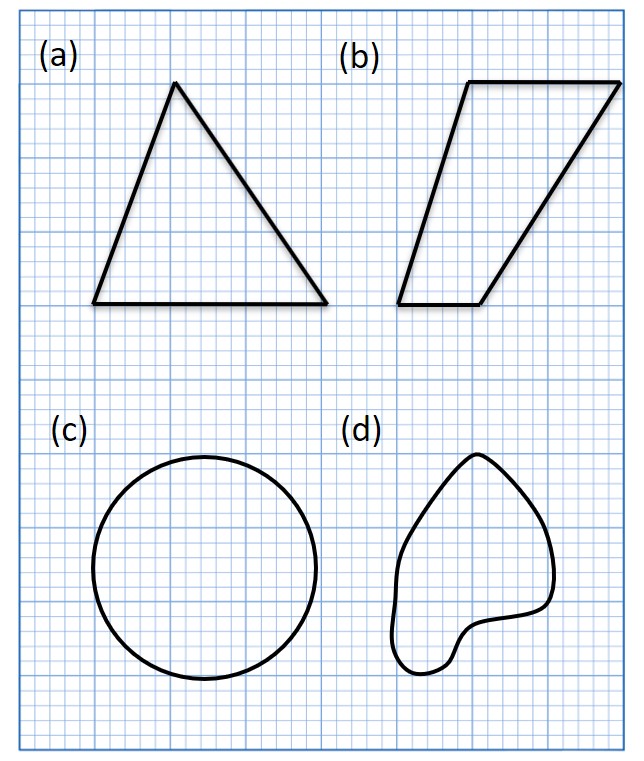
- Measure the area of the same shapes with the help of the graph paper squares. Write down your results in column B of the table. The values of the areas that have resulted for each shape are the same? If not, why do you think there is this difference?
Part 3: Volume measurement
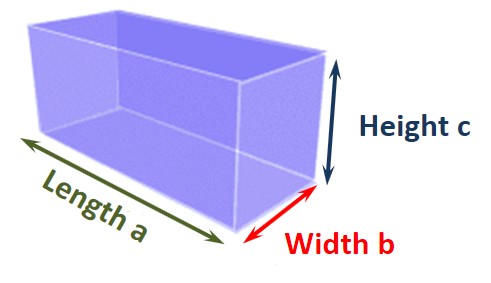
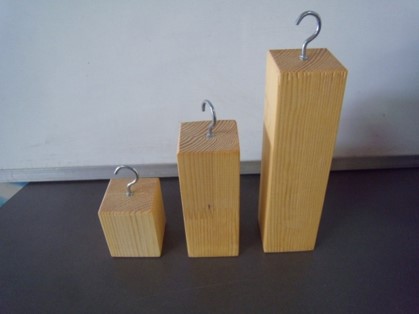
- Measure the dimensions of the wooden rectangular parallelepiped blocks (length a, width b, height c) with a ruler.
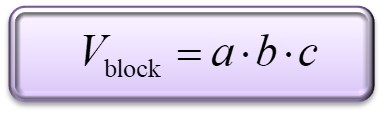
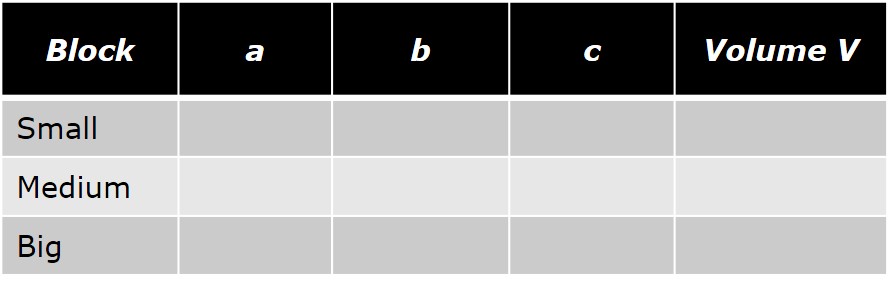
- Calculate the volumes from the known geometric form and fill the table below:
- Inside the plastic cylinder add water of specific volume (e.g. VΑ = 70 ml as in the image).
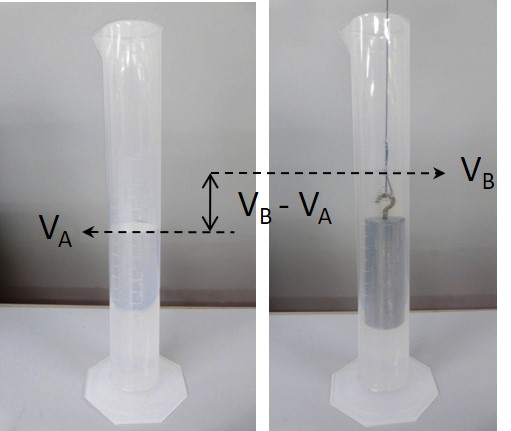
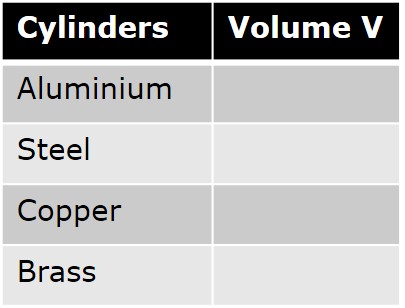
- Then one by one submerge the metal cylinders into the water and record the new value of the volume VΒ of the new water level. The difference VB -VA indicates the volume of the metal cylinder that we submerged, as the volume of the water remains unchanged. Write down the results in the column of the table. What differences you notice with the previous method? (steps 9 and 10).
- Then draw an irregular shape with plastecine. Calculate the shape’s volume with the method of the plastic cylinder.
Conclusions
- Each measurement includes an uncertainty which is either due to how it is measured or the accuracy of the measuring instruments.
- The effect of random errors is not known in advance, but if we measure the same size several times we can estimate the true value of the size. This is achieved with the average value of the measurements.
- Sometimes when measuring a size we know more than one ways. The more appropriate is the one that produces:
- the greater consistency and hence repeatability
- the best accuracy of results
- the minimum errors or uncertainty measurements
Question 1
Can we calculate the area of an unknown shape by comparing it with a known size shape?
- True
- False
Question 2
A cube has a volume V. If we double its edges, the volume will be:
- 4V
- 2V
- 8V
- 6V
Question 3
Which of the following sentences is correct?
- 1000 mm is equivalent to 10m.
- 1 cm is greater than 7 mm.
- 1 m is greater than 112 cm.
Question 4
We have a graduated cylinder of 200 ml. Which of the following sentences is correct?
- The volume of the liquid in the cylinder, when it is full, is 200 ml.
- The volume occupied by the cylinder material is 200 ml.
- When the cylinder is filled with liquid, the liquid volume and the volume of the cylinder material is 200 ml.
Question 5
The cm2 is the measurement unit of:
- time
- volume
- area
- length
Question 6
Great precision in distance measurement is required when measuring
- the length of a school desk.
- the distance between two cities.
- the distance between Earth and Moon.
- the diameter of the tip of a drill.
End of tutorial