
In this tutorial we will study: a. The concept of measurement, the measurement units of geometrical dimensions, the various instruments and measuring scales, the types and errors of measurement. b. The errors of an instrument and the error rate of their use and selection of the appropriate instrument.

1. Introduction
The term measurement can be indicated either in a list using natural numbers, or comparing the amount of a physical size with a standard, i.e. in comparison with a fixed amount of the
same physical size that arbitrarily was selected to be used as a measurement unit.

The measurements are extremely important parameters for science, technology and industry. The development of techniques for the accurate measurement of sizes such as mass and time was provided for detailed and careful observation of nature and the development of the science of Physics.
2. Length
Length of one line segment is called the distance between the two edges. This definition is not complete, it needs necessarily a measurement unit, i.e. a determined segment that has a length equal to 1.
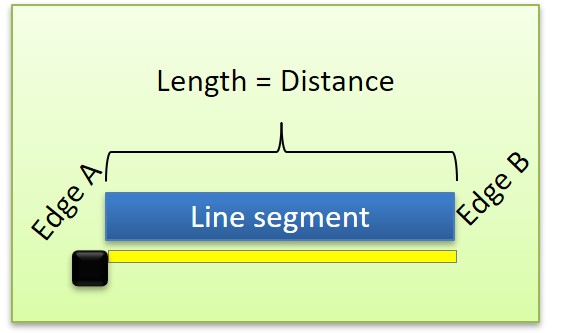
The basic unit of length in the International System of Units* (SI) is the meter.
* The international system of units (SI) is the modern form of the metric system and is the most widely used system in the world, both used in everyday commerce and in all branches of science. We will refer more detailed to SI below.

Some subdivisions of meter are:
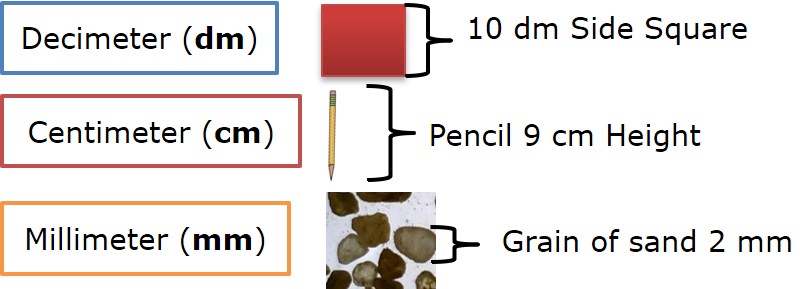
A multiple of meter is:

1 m = 10 dm = 100 cm = 1000 mm
1 cm = 10 mm
1 Km = 1000 m
3. Meter and Subdivisions

Question 1
A metric tape, 1 meter length is 1000 lines printed. Each line corresponds to:
- 0.1 mm
- 10 mm
- 1 mm
- 1 cm
4. Average Value
The length by implication has received another meaning as dimension. Usually the longer (horizontal) dimension of an object is called length, while the other horizontal is called width and vertical one is called height. The three dimensions are measured in the same way with the same units. Length can also be considered as distance, thickness, circumference, diameter, circumference and many other geometric dimensions.

Two of the most common length measuring instruments we use in this phase are:
4.1. Ruler

Ideal for measurements less than 30 cm. Also features subdivision in millimeters (mm) where 10 mm = 1 cm
4.2. Tape measure
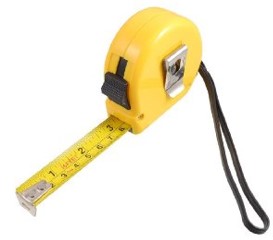
Useful for measurements over 30 cm. It features subdivisions in centimeters (cm) and millimeters (mm).
10 mm = 1 cm
100 cm = 1 m
Question 2
Suppose we want to measure the natural length of a school textbook. Which of the following measuring positions will give us the right result?

4.3. A few words about errors
Each measurement involves an error due either to the way that measurement is done (Human or random factor) or the accuracy of measuring instruments.
For example, if we measure the length of an object with a ruler, the measured value will depend on the exact position that will place the ruler, the assessment will do for the accurate display at the edge location of the object, the observation angle, etc.. This results in different measurements with each other by a small random amount. Later, we will refer to the second factor, the accuracy of the instruments and the size of the measurement error of an institution.


Question 3
Students are called to measure the length of the book of Physics using a ruler and recording the results in centimeters in the table below. Then to calculate the average (Mean) of all measurements.

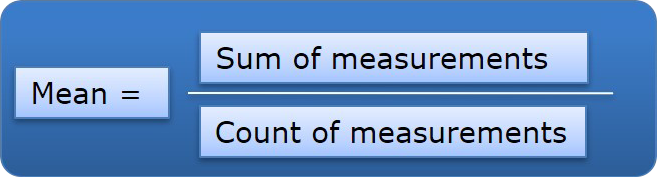
Books theoretically should have the same length. The accuracy of industrial bookbinding on this scale is important so you should not have large variations between measurements and the average. If there are, then it is quite possible that measurements have not been done properly and must be rechecked.
Question 4
Students are called to measure the length of their school desk using a tape measure and recording their results in meters in the table below Then to calculate the average (Mean) of all measurements.


The school desks theoretically should have the same length. The accuracy of industrial furniture in cutting identical dimensions is accurate however small deviations between measurements may be found in this range than the average of manufacturing differences, apart from incorrect measurements.
How do we measure the maximum length of an egg?
- Just find the outermost edges and measure their distance as in the picture!

How can we measure the thickness of a page of our book?
- The thickness of a book page is much smaller than one millimeter and can not be measured directly with a ruler, but the thickness of all the pages is large enough!
So measuring the thickness of all book pages (without 2 covers) with a ruler, and knowing the number of all pages we can divide these two numbers so we get an excellent approach to the thickness of each page!


5. Measurements Precision
If we want to measure with greater precision certain sizes as a material thickness, the diameter of a screw or other small materials then surely a ruler is not the most appropriate instrument. The same of course applies if you choose to measure the height of Olympus mountain with a ruler.

The technical measures must be more precise and to reduce the error of the human factor to a minimum. For each type of measurement must use the appropriate instrument in relation to the scale of the measurement of the object.
We will examine the most basic of these instruments, their functions and the proper way of recording the measurements we take.
Let us take a wooden rectangle. With the ruler of 30 cm we measure it and the length is 20 cm. How is the correct way of recording this measurement. The ruler we measure is of precision in millimeter (mm).


Always remember. In mathematics when the decimal is zero we can subtract ie. 20.0 and 20 is the same. In scientific measurements we cannot do this simplification. The 20.0 cm indicates the accuracy in deecimeters, ie millimeters.
| 0.2 m | It is not precise. Indicates decimeter precision |
| 0.20 m | Not quite accurate. Indicates centimeter precision |
| 20 cm | Not quite accurate, as above |
| 20.0 cm | Is accurate Indicates millimeter precision |
| 200 mm | It is also accurate. Is in millimeters |
Question 5
You measured a piece of wood with a ruler of mm gradation and its length is 13.5 cm. Which number represents the precise measurement?
- 13.50 cm
- 13.5 cm
- 13.5000 cm
- 13.500 cm

6. International System of Units
The basic unit of measurement of the length in the International System of Units (SI) is the Meter.
The Accepted subdivision or multiples units according to the SI are shown to the adjacent table. All units are subdivisions or multiples of one thousand.

The decimeter and centimeter are not part of the accepted units of SI but are used conventionally constantly in our everyday life.
In the right column we see the expression of SI units in the exponential form (power of 10).
7. The Exponential Form
For arithmetic depiction of very large or very small measurement, we use the exponential form (power of 10).
In exponential form of large measurements, multiples of meter, power of 10 is positive

and in small measurements, subdivisions of meter, power of 10 is negative.
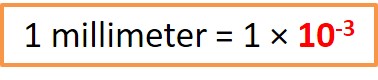
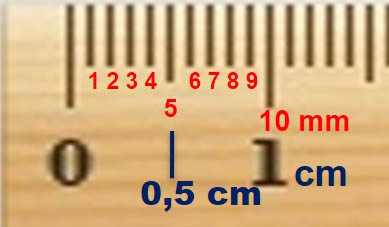
1 meter has 1000 millimeters, so 1 millimeter is 1/1000= 0.001 meters:
1 mm = 0.001 m = 1 x 10⁻³ m
1 meter has 100 centimeters, so 1 centimeter is 1/100= 0.01 meters.
1 cm = 0.01 m = 1 x 10⁻² m
1 meter has 10 decimeters, so 1 decimeter is 1/10= 0.1 meters.
1 dm = 0.1 m = 1 x 10⁻¹ m
Let’s measure the length of object Α
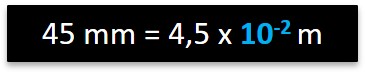
And it is 45 millimeters.


So length of Α, should be in exponential form:

In exponential form, however, the number multiplied by the power of 10 must be smaller than 10
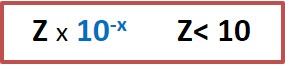
So the length of Α, should be written:
Various length measurements
- A 67 kilometers distance:
67 Km = 6.7 x 10⁴ m
- Perimeter of Earth, 40,000 kilometers:
40,000 Km = 4 x 10⁷ m
- The wavelength of green color is 550 nm
550 nm = 550 x 10-9 m = 5.5 x 10⁻⁷ m
Question 6
What is the correct exponential form of the measurement 0.000000071 m?
- 7.1 x 10⁻⁹ m
- 71 x 10-7 m
- 710.0 x 10⁻⁸ m
- 7.1 x 10⁻⁸ m
Question 7
What is the correct exponential form of the measurement 41,478 Κm?
- 41.478 x 10⁶ m
- 0.41478 x 10⁸ m
- 4.1478 x 10⁷ m
- 41,478.00 x 103 m
Question 8
The distance measurement with exponential form 1.5 x10¹¹ m is possibly:
- The measurement of the diameter of the earth.
- The measurement of the wavelength of white light.
- The measurement of the distance between the earth and the sun.
- The measurement of distance between north pole-south pole of the earth
Question 9
What unit of measurement does not belong to the International System of Units (SI);
- The meter
- The centimeter
- The millimete
- The kilometer
8. Measurement Errors
Generally, each institution from its construction includes a precision level measurements. Beyond this limit the measurement always includes the possibility of error.
Each measuring instrument, not only in length, in its structural features include the word precision. E.g. a weighing scale with weighing scale from 0-500 grams, has an accuracy of +/- 0.5gr. and a second with the same scale has an accuracy of up to +/- 0.01gr. The second gives us more accuracy in measurements and are usually quite expensive. Less accuracy means greater error.
A ruler have as minimum of measurement the millimeter. This one millimeter, called maximum measurement resolution for other instruments, is the maximum possible error (statistical) of the measurement.
When we measure the length, for example 35 millimeters, with a ruler practically the actual length ranges from 34.5 millimeters to 35.5 millimeters. The measurement error of the ruler is +/- 0.5 millimeters because actually the total error is 1 mm but should appear as a total difference (+) or (–) of the actual length.
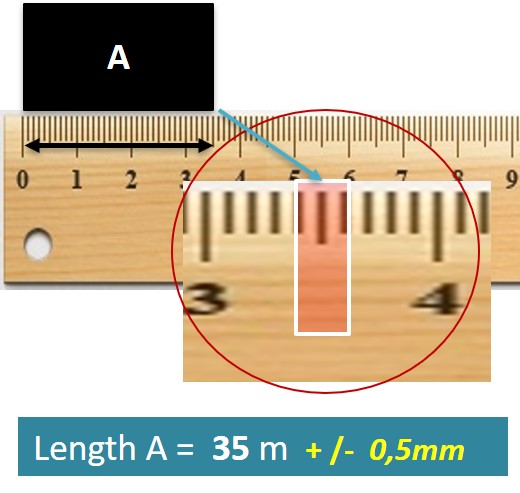
The instrument error is indigenous error due to the limitation of the analysis of the minimum calibration and not the random result of incorrect use.
This indigenous error of the instrument is accurate and absolute and must be included in our measurements, provided that they concern research or experimentation requiring maximum measurement accuracy for reliable conclusions.
The inclusion may be done by determining the rate of error for the measurement of the specific object A with the specific instrument, the ruler.
Length of object Α is measured 35 millimeters. The maximum measurement error of the ruler is 1 millimeter.

In this calculation, we observe that as the denominator decreases, the error rate in the measured length increases proportionally. This means that smaller measurement units can amplify even slight inaccuracies, resulting in a larger relative error in the overall measurement.
If we wanted to measure the length of an object that would be 1/3 of A then the error rate would be threefold, 8.55% which is too high and indicates to us that the ruler is not an appropriate gauge for very short lengths. In contrary for twice the length of A the error rate would be 1.43%, an error rate quite acceptable.
Question 10
If a length measurement of an object is ranged from 47 mm ± 1.5 mm, then which is the larger/smaler possible length of the object?
- 47.5 mm / 44.5 mm
- 46.0 mm / 45.0 mm
- 48.5 mm / 45.5 mm
- 46.0 mm /48.0 mm
Question 11
What is the % error in a measurement of 20 mm, with a ruler of minimum calibration 1mm?
- 1%
- 5%
- 10%
- 20%
In certain experiments, it’s crucial to consider not only our own measurement but also the potential statistical error introduced by the measuring instrument.
If for example we measured with a ruler with 1 mm graduation the three sides of a rectangular parallelogram, we could record the possible error next to our measurement.

To calculate the volume of the rectangle we should multiply the three sides. But what is the possible error in this calculation? We know that the error rate of each measurement is:


Having calculated the volume and knowing the possible error of each measurement of the sides, how we calculate the error rate in the calculation of the volume?


The error rate in the calculation of the volume is the sum of the error rates on each side (not the product)!
9. Graph Measurement and Interpolation
In science, often a series of measurements, done by sampling or experimentation, due to the errors of the instruments do not always represent fully and accurately the values of a function in which they should obey. This can be corrected by the interpolation and adjusting the curve of the measurements graph.
Often it is required to interpolate the estimate of the error in the graphic display of the measurements so that we have now not a range of points but a region of points within it can now operate the function.

The graphical display of the error is reflected in a line which is centered on the point of every measurement and has as length the length of the error (+/).
By interpolation, a line then, passing through the middle of this region can give the linear curve or another form of curve.
10. Small-scale Measurements
As shortens the length of what we want to measure with a ruler of 1mm minimum calibration accordingly increases the error rate of our measurement.
For short lengths and objects, there are other instruments which are used, that their error rate is quite lower than the ruler.
One of these instruments is the caliper Vernier. This instrument has the minimum graduation 0.02 mm (remember the ruler is 1 mm).
The caliper Vernier gives five times smaller error rate during the measurement of a length in relation to the measurement with a ruler of 1mm calibration.

The instrument is suitable for high-precision measurements in micro-objects and measures:
- Length
- Inner/outer diameter
- Thickness
- Depth

The parts of caliper are:
- External jaws
- Internal jaws
- Depth measuring blade
- Metric scale in cm
- Metric scale in inches
- Vernier scale
- Locking screw
Understanding the Vernier Caliper System for Precise Measurements
A Vernier caliper, an accurate measuring tool, has two main components:
- Part A: This is a metal ruler marked in millimeter increments (1 mm).
- Part B: This sliding metal component includes a Vernier scale, which enhances measurement precision to 0.02 mm. The Vernier scale is divided into 10 gradations, and only one of these lines will align exactly with a line on the main ruler during a measurement.
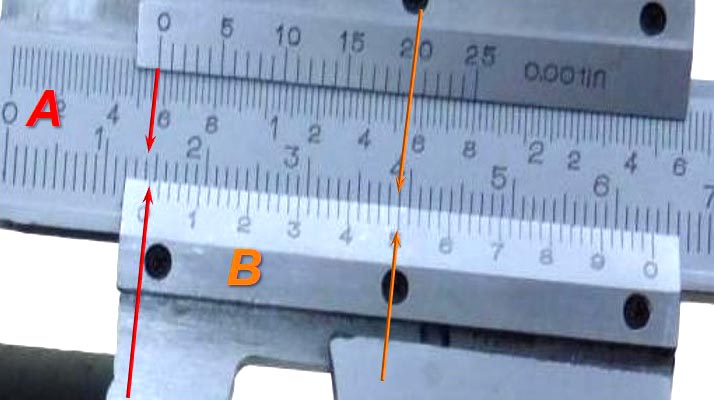
Steps to Measure the Thickness of Object X:
- Read the Main Scale: First, identify the position on the main scale (in centimeters or millimeters) that aligns with the “0” mark on the Vernier scale. In this example, the main scale reads 1.4 cm (14 mm).
- Check the Vernier Scale: Look for the mark on the Vernier scale that lines up exactly with a line on the main scale. Here, the “5” mark on the Vernier scale is aligned, indicating an additional 0.5 mm to add to the main scale reading.
This results in a total measurement of 14.5 mm (14 mm from the main scale + 0.5 mm from the Vernier alignment).

Let’s now measure the length of a nut. With the ruler the length of the nut is measured 2.5 centimeters. Let’s first close the two jaws of the caliper.
- Α. The zero of the small scale is located at 2.4 cm of the large scale.
- Β. Line 7 of the small scale is aligned with a line of large-scale on line 7. So we have other 0.07 cm.
Length in mm = 24 mm + 0.7 mm = 24.7 mm
Example 2:
Using Modern Calipers and Micrometers for Precision Measurement
Modern Vernier calipers offer the same high accuracy as traditional models but display measurements either through an analog indicator or digitally. Both types provide precision up to 0.01 mm.


For even greater accuracy, the micrometer is a specialized instrument used to measure small lengths with the highest precision.
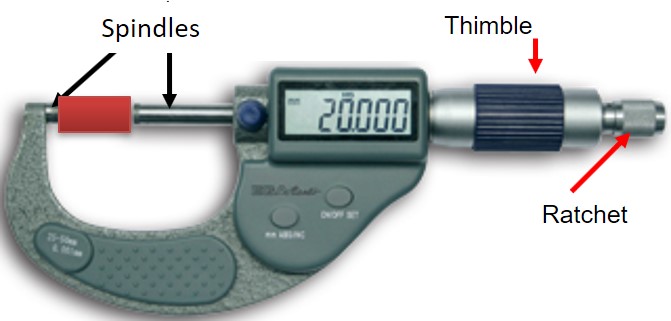
How to Use a Micrometer:
- To measure an object, open the micrometer’s thimble, place the object between the spindles, and gently close. As the spindle approaches the object, use the ratchet to avoid over-tightening.
- Micrometers can measure with precision up to 0.0025 mm (or 2.5 microns). Modern micrometers often display measurements digitally for ease and accuracy.
End of tutorial